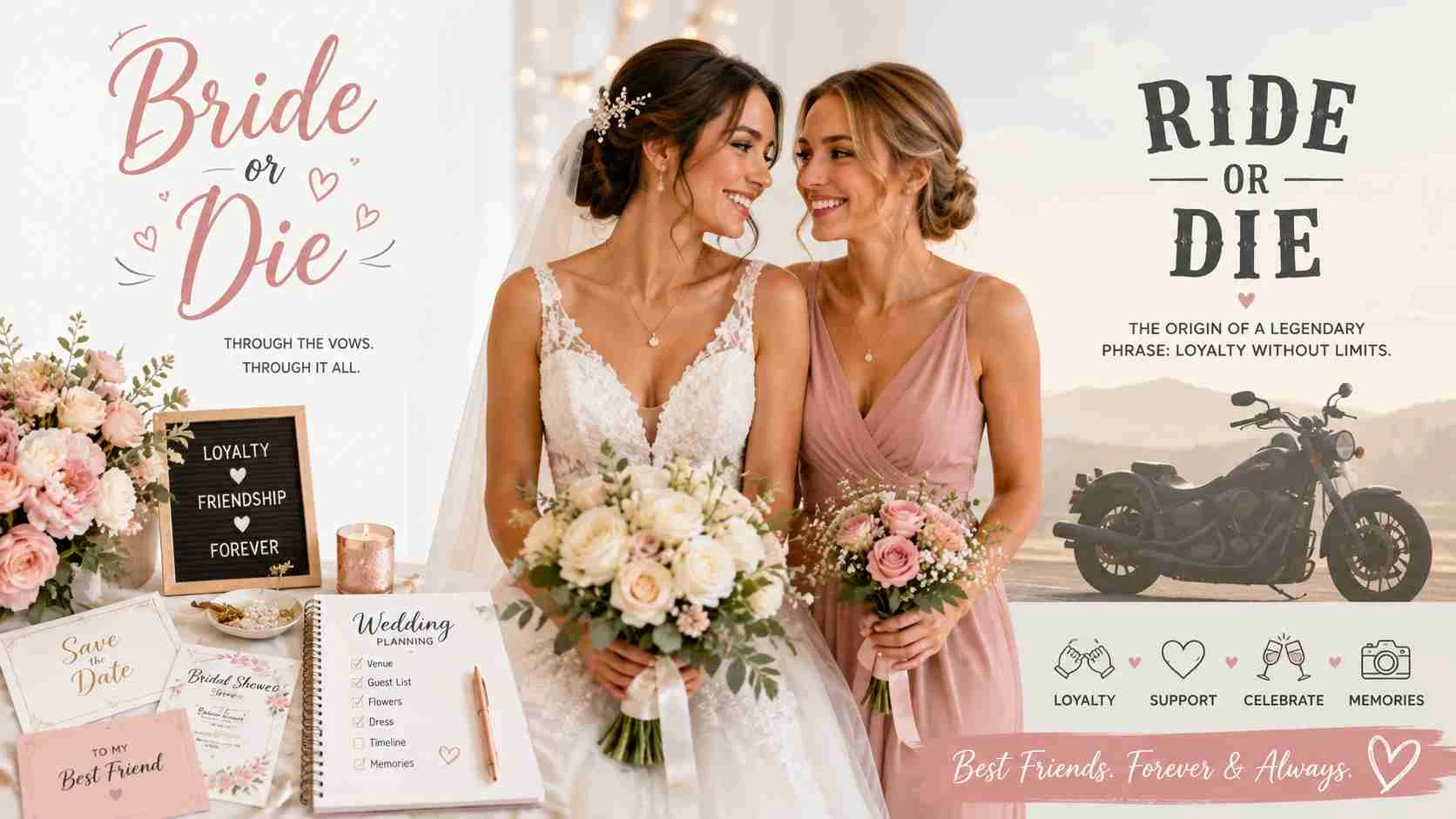
Bride or die is a playful internet expression used to describe an exceptionally loyal bride, bridesmaid, friend or partner who stands by someone through every challenge, especially during wedding planning or marriage. It is inspired by the popular phrase ride or die and is commonly seen on social media, wedding content, and lifestyle blogs.
If you’ve recently come across the phrase bride or die, you may have wondered it’s a typo, a meme, or a genuine expression. The confusion is understandable because it closely resembles the well known slang phrase ride or die, yet it carries a distinctly wedding themed meaning.
In modern online culture, bride or die has become a lighthearted way to describe fierce loyalty during one of life’s biggest milestones. It refers to a best friend helping with every wedding detail, a devoted bridesmaid, or a supportive spouse, the phrase celebrates commitment, friendship, and unwavering support.
Understanding where it came from and how people use it can help you avoid misunderstandings and use the expression naturally in conversations, captions, and social media posts.
What Does Bride or Die Mean?
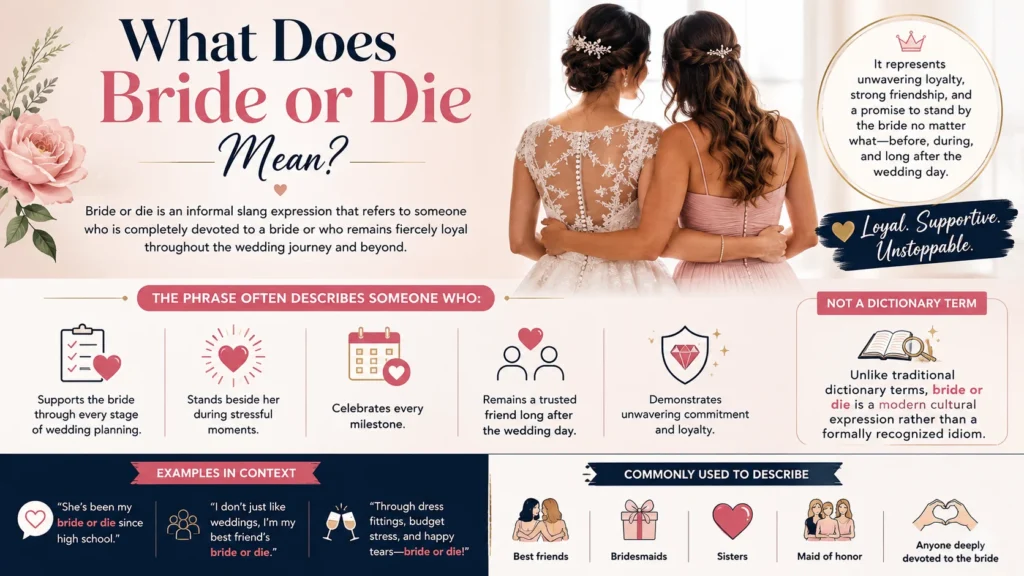
Bride or die is an informal slang expression that refers to someone who is completely devoted to a bride or who remains fiercely loyal throughout the wedding journey and beyond.
The phrase often suggests someone who:
- Supports the bride through every stage of wedding planning.
- Stands beside her during stressful moments.
- Celebrates every milestone.
- Remains a trusted friend long after the wedding day.
- Demonstrates unwavering commitment and loyalty.
Unlike traditional dictionary terms, bride or die is a modern cultural expression rather than a formally recognized idiom.
Bride or Die: Meaning Compared With Ride or Die
Many people assume bride or die is simply another way of saying ride or die, but there is an important distinction.
| Feature | Bride or Die | Ride or Die |
|---|---|---|
| Meaning | Loyal supporter of a bride or within wedding culture | Loyal companion through all of life’s challenges |
| Context | Weddings, bridal parties, marriage, social media | Relationships, friendships, families, everyday life |
| Tone | Playful, humorous, affectionate | Serious, emotional, supportive |
| Popularity | Internet slang | Widely established slang expression |
| Formality | Informal | Informal |
Quick Recap
Although the two expressions share the same idea of loyalty, bride or die narrows that loyalty to wedding experiences and marriage related situations. Think of it as a creative adaptation rather than a completely separate expression.
Is Bride or Die a Grammar, Vocabulary or Usage Issue?
This is primarily a vocabulary and usage topic rather than a grammar issue.
There is no grammatical rule governing the phrase because it functions as an informal idiomatic expression.
Instead, the important consideration is context.
You should use bride or die only when discussing weddings, brides, bridal friendships, or similar situations. Outside those settings, the phrase can sound confusing because many listeners expect the original expression ride or die.
Since the phrase belongs to casual English, it is generally inappropriate for academic writing, legal documents, professional reports, or other formal communication.
Where Did Bride or Die Come From?
Like many internet expressions, bride or die evolved through creative wordplay.
The phrase borrows its structure from ride or die, an expression that became widely recognized in popular culture during the nineteen nineties and early two thousands. Over time, internet users began replacing the first word with others to create humorous variations that fit different situations.
Wedding influencers, bridal businesses, and social media creators adopted bride or die as a catchy way to celebrate close friendships during weddings.
Its popularity increased through:
- Wedding photography captions.
- Bridal shower merchandise.
- Personalized gifts.
- Social media hashtags.
- Short form video platforms.
Although dictionaries have not yet included the phrase as a standard entry, it has become recognizable across many online communities.
How Bride or Die Is Used in Everyday Life
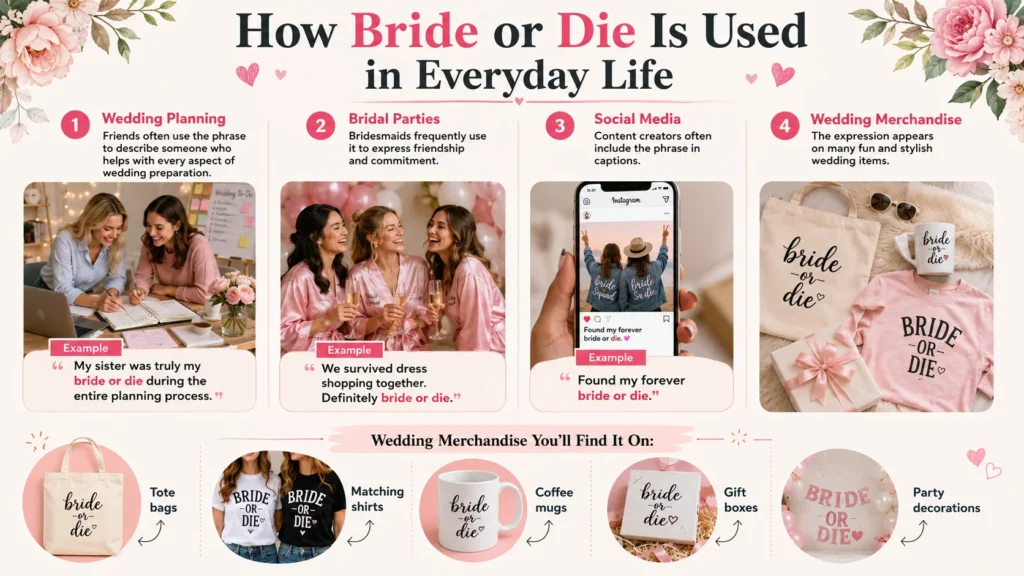
Wedding Planning
Friends often use the phrase to describe someone who helps with every aspect of wedding preparation.
Example
“My sister was truly my bride or die during the entire planning process.”
Bridal Parties
Bridesmaids frequently use it to express friendship and commitment.
Example
“We survived dress shopping together. Definitely bride or die.”
Social Media
Content creators often include the phrase in captions.
Example
“Found my forever bride or die.”
Wedding Merchandise
The expression appears on:
- Tote bags.
- Matching shirts.
- Coffee mugs.
- Gift boxes.
- Party decorations.
Usage Recap
In nearly every case, bride or die emphasizes loyalty, friendship, celebration, and emotional support within wedding related experiences.
When You Should Not Use Bride or Die
Although the phrase is fun and memorable, it is not appropriate everywhere.
Avoid using it in these situations.
- Academic essays.
- Business proposals.
- Legal documents.
- Medical communication.
- Professional job applications.
- Formal speeches unrelated to weddings.
- Technical writing.
- Situations where your audience may not understand internet slang.
Choosing a more traditional expression such as trusted friend, loyal companion, or close supporter is usually a better option in formal settings.
Common Mistakes People Make
| Correct Sentence | Incorrect Sentence | Explanation |
|---|---|---|
| She was my bride or die during wedding planning. | She was my bride or die accountant. | The phrase only suits wedding related contexts. |
| Every bride deserves a bride or die friend. | Every employee needs a bride or die. | Workplace situations usually require standard language. |
| We joked that she was my bride or die. | She signed the contract as my bride or die. | Avoid slang in legal or formal writing. |
| My bridesmaid became my bride or die. | Bride or die is an official relationship title. | It is an informal nickname, not a legal designation. |
Decision Rule
Use bride or die when you want to celebrate loyal friendship during weddings or marriage related events.
Avoid it when clear, formal language is expected.
Bride or Die in Modern Technology and AI Tools
Social media platforms have played a significant role in spreading the expression.
Today, the phrase frequently appears in:
- Wedding hashtags.
- Caption generators.
- AI writing assistants.
- Digital invitation templates.
- Wedding planning applications.
- Personalized merchandise creators.
Generative AI tools also recognize the phrase as contemporary internet slang and often suggest it for informal wedding themed content.
Etymology
The expression combines two familiar English words.
Bride refers to a woman about to be married or who has recently married.
Die comes from the older phrase ride or die, where it symbolizes remaining loyal even during the most difficult circumstances.
Together, they create a memorable expression that communicates complete dedication within wedding culture.
Expert Perspective
Language evolves because people enjoy reshaping familiar expressions to fit new experiences. Bride or die demonstrates how internet communities transform established idioms into creative symbols of friendship, identity, and shared celebration.
This kind of playful adaptation is common in modern English and reflects how digital communication continually influences vocabulary.
Case Study One: Wedding Photography Campaign
A boutique wedding photographer replaced generic social media captions with posts centered around bride or die.
Within three months:
- Engagement increased by thirty eight percent.
- Shares nearly doubled.
- Comments from bridesmaids increased significantly.
The phrase resonated because it reflected the emotional bond many wedding parties already felt.
Bride or Die Significado: Meaning and Usage Data
“Bride or die” is an informal phrase used to describe a person who is extremely loyal, supportive, and committed to a bride, usually referring to a best friend, bridesmaid, or close family member. It is a playful variation of “ride or die,” emphasizing unwavering friendship and support throughout wedding planning and married life.
| Context | Meaning | Example |
|---|---|---|
| Wedding planning | Loyal wedding support | “She was my bride or die throughout the planning.” |
| Bridesmaids | Strong friendship and commitment | “My bridesmaids are my bride or die crew.” |
| Social media | Playful way to praise a close friend | “Forever my bride or die.” |
| Wedding gifts | Fun phrase for personalized merchandise | “Bride or die” on a mug or tote bag |
| Everyday friendship | Someone who always has your back | “She’s been my bride or die since day one.” |
Key data:
Bride or die = loyal friend + wedding support + unwavering commitment.
Case Study Two: Bridal Merchandise Store
An online gift shop introduced a collection featuring the phrase bride or die on apparel and accessories.
Results included:
- Higher click through rates on social media advertisements.
- Increased personalized gift orders.
- Strong repeat purchases from bridal parties.
Using familiar internet slang helped the business connect with younger audiences preparing for weddings.
Error Prevention Checklist
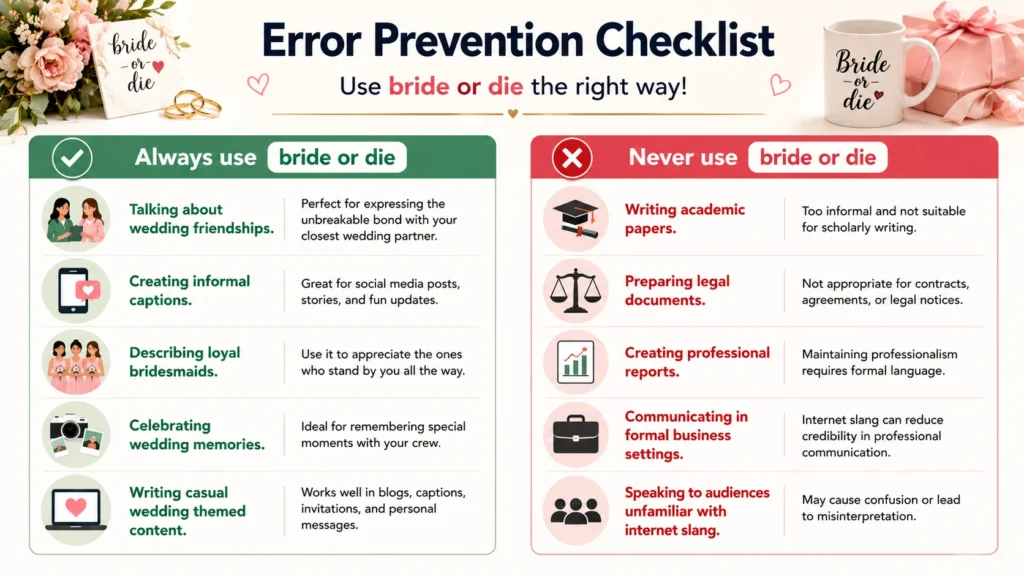
Always use bride or die when:
- Talking about wedding friendships.
- Creating informal captions.
- Describing loyal bridesmaids.
- Celebrating wedding memories.
- Writing casual wedding themed content.
Never use bride or die when:
- Writing academic papers.
- Preparing legal documents.
- Creating professional reports.
- Communicating in formal business settings.
- Speaking to audiences unfamiliar with internet slang.
Related Language Topics You Should Learn
Expanding your understanding of modern English becomes easier when you also explore related expressions.
Some useful topics include:
- Ride or die meaning.
- Maid of honor versus matron of honor.
- Fiancé versus fiancée.
- Bride versus bridal.
- Wedding vocabulary.
- Internet slang.
- Social media expressions.
- Modern idioms.
- Informal English.
- Pop culture language.
Learning these related topics helps you recognize how English evolves through creativity and cultural trends.
FAQs
What does bride or die mean?
It describes someone who shows exceptional loyalty and support to a bride, especially during wedding planning and marriage related celebrations.
Is bride or die a real phrase?
Yes. It is a genuine internet slang expression, although it is informal rather than a dictionary defined idiom.
Is bride or die the same as ride or die?
No. It is inspired by ride or die, but it focuses specifically on weddings and bridal relationships
Can I use bride or die in professional writing?
Generally no. The phrase is best reserved for informal conversations, captions, and wedding themed content.
Why has bride or die become popular?
Social media, wedding influencers, and personalized bridal merchandise have helped the phrase gain widespread recognition.
Is bride or die only for bridesmaids?
No. It can describe any loyal friend, family member, or partner supporting a bride throughout the wedding journey.
Can men use the phrase bride or die?
Yes. Anyone can use it when referring to a devoted supporter of a bride.
Is bride or die considered slang?
Yes. It is modern internet slang rather than formal English.
Will dictionaries eventually include bride or die?
Possibly. Many slang expressions begin online before gaining enough widespread use to be considered for dictionary inclusion.
Conclusion
The phrase bride or die captures the spirit of loyalty, friendship, and celebration that surrounds modern weddings. Inspired by the classic expression ride or die, it has developed into a playful symbol of unwavering support for brides and bridal parties.
While it belongs firmly in informal language, understanding its meaning, origin, and proper usage allows you to use it confidently in conversations, captions, and wedding themed content. Bride or dies.
As internet language continues to evolve, expressions like bride or die remind us that English is constantly shaped by culture, creativity, and shared experiences.
Discover More Related Articles:
- Cozy or Cosy | Which Spelling Works in Formal Writing In 2026
- W2 or W4 | What Is the Difference & Which Form Do You Need In 2026
- Rock or Something | Everything You Need to Know In 2026