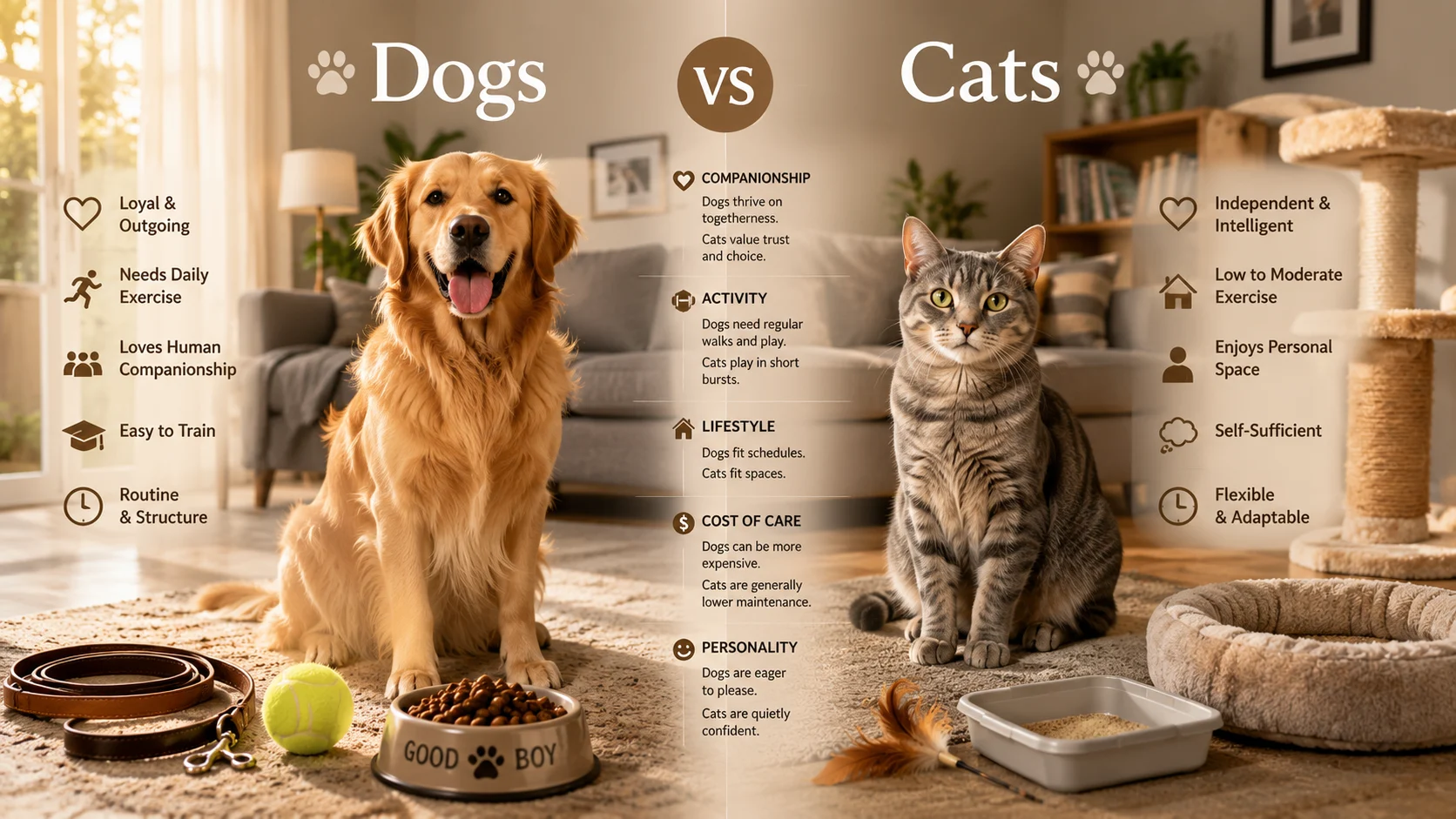
Choosing between dog or cat depends on your lifestyle, available time, living space, and personal preferences. Dogs are generally more social and active, while cats tend to be more independent and require less daily attention. Understanding these differences helps you choose the pet that best matches your home and routine.
The question dog or cat is one of the most common debates among people planning to adopt a pet. Both animals have been trusted companions for thousands of years, yet they offer very different experiences. A dog is known for loyalty, energy, and companionship, while a cat is admired for independence, curiosity, and quiet affection.
Many first time pet owners make their decision based only on appearance or popularity. Unfortunately, this can lead to unexpected challenges after adoption. A high energy dog may not suit someone with a busy schedule, while an independent cat may disappoint a person looking for constant interaction.
This guide compares dogs and cats from every important angle, including personality, care, training, cost, health, living space, and family compatibility. By the end, you will have a clear understanding of which pet is the better match for your lifestyle.
Dog or Cat | What’s the Difference?
Although both dogs and cats are popular household pets, they differ significantly in behavior, communication, exercise needs, grooming, and daily care.
| Feature | Dog | Cat |
|---|---|---|
| Scientific Family | Canidae | Felidae |
| Personality | Social and loyal | Independent and curious |
| Daily Exercise | High | Low to moderate |
| Training | Easier to train | Can learn but is generally less responsive |
| Grooming Needs | Depends on the breed | Usually self grooming |
| Social Behavior | Enjoys constant companionship | Comfortable spending time alone |
| Living Space | Needs more room and regular outdoor walks | Adapts well to apartments and smaller homes |
| Noise Level | Often barks | Usually quiet |
| Lifespan | Around 10 to 15 years | Around 12 to 20 years |
| Ideal Owner | Active individuals or families | Busy professionals and apartment residents |
Dogs thrive on companionship and routine. They usually enjoy spending time with people and participating in outdoor activities.
Cats, on the other hand, value independence. They often entertain themselves, maintain their own hygiene, and are comfortable spending several hours alone.
Both animals can become loving lifelong companions when their physical and emotional needs are met.
Which Pet Matches Your Lifestyle?
Before bringing a pet home, honestly evaluate your daily routine rather than choosing based on emotion alone.
Dogs Are Best For
People who enjoy outdoor activities often appreciate dogs because they require regular walks and exercise. Families with children also benefit from the playful nature of many dog breeds. Individuals seeking an affectionate companion that enjoys constant interaction usually find dogs rewarding.
Dogs are also excellent for people who enjoy structured routines since feeding, exercise, training, and socialization become part of daily life.
Cats Are Best For
Cats are often a better choice for people who work long hours or travel occasionally. They require less supervision throughout the day and are comfortable entertaining themselves.
Apartment dwellers frequently choose cats because they adapt well to smaller living spaces without needing daily outdoor walks.
Many people also appreciate that cats groom themselves regularly, making them relatively low maintenance compared to many dog breeds.
Personality Comparison
Personality is often the deciding factor when choosing between a dog and a cat.
Dog Personality
Dogs naturally form strong emotional bonds with their owners. Many breeds eagerly greet family members at the door, enjoy playing games, and seek attention throughout the day.
Because dogs evolved alongside humans as working companions, they often look to people for guidance and direction.
Common personality traits include:
- Loyalty
- Enthusiasm
- Protectiveness
- Playfulness
- Sociability
Cat Personality
Cats express affection differently. Instead of constant attention, many cats show trust through quiet companionship, gentle purring, slow blinking, or simply sitting nearby.
Cats are naturally curious and enjoy exploring their surroundings independently.
Typical personality traits include:
- Independence
- Curiosity
- Calm behavior
- Intelligence
- Adaptability
Neither personality type is better. They simply appeal to different lifestyles and expectations.
Care Requirements
Daily care is one of the biggest practical differences between dogs and cats.
| Care Area | Dog | Cat |
|---|---|---|
| Feeding | One to three meals daily | One to three meals daily |
| Walking | Required | Usually not required |
| Litter Box | No | Yes |
| Bathroom Breaks | Outdoor trips | Indoor litter box |
| Grooming | Depends on the breed | Mostly self grooming |
| Play Time | High | Moderate |
| Veterinary Visits | Regular checkups and vaccinations | Regular checkups and vaccinations |
Dogs require more direct involvement every day. Walking, exercise, socialization, and training are essential responsibilities.
Cats still require attention, enrichment, and veterinary care, but their daily routines are generally less demanding.
Training and Intelligence
Both dogs and cats are intelligent animals, but they learn differently.
Dogs naturally respond to human communication and enjoy working alongside people. Positive reinforcement helps dogs quickly learn commands such as sit, stay, come, and fetch.
Cats can also learn commands and tricks, but they usually participate only when motivated. Their intelligence often appears through problem solving rather than obedience.
Technology has even shown that puzzle feeders and interactive toys can stimulate both species mentally, reducing boredom and encouraging healthy behavior.
Exercise Needs
Exercise requirements can significantly influence your decision.
Most dogs require daily walks, active play sessions, and opportunities to explore outdoors. High energy breeds may require several hours of activity each day.
Cats exercise through climbing, jumping, chasing toys, and short bursts of energetic play. Indoor climbing trees and scratching posts help satisfy these natural instincts.
Owners who cannot commit to daily outdoor activities may find cats easier to manage.
Cost of Ownership
Financial commitment extends far beyond the initial adoption fee.
Typical expenses include:
| Expense | Dog | Cat |
|---|---|---|
| Adoption | Moderate | Moderate |
| Food | Higher | Lower |
| Veterinary Care | Moderate to high | Moderate |
| Toys | Moderate | Moderate |
| Grooming | Sometimes expensive | Usually minimal |
| Boarding | Often higher | Usually lower |
| Equipment | Leashes, beds, crates, and collars | Litter boxes, scratching posts, and carriers |
Over the lifetime of the pet, dogs generally cost more because of food consumption, training classes, boarding, and grooming requirements.
Cats usually have lower ongoing expenses, although medical care remains equally important for both animals.
Health and Lifespan
Health care is an essential responsibility regardless of which pet you choose. Regular veterinary checkups, vaccinations, proper nutrition, and preventive care contribute to a longer and healthier life.
Dogs are more likely to experience joint problems, obesity, and breed specific health conditions depending on their genetics. Active breeds often remain healthy with proper exercise and balanced diets.
Cats commonly face dental disease, kidney issues, obesity, and urinary tract problems as they age. Indoor cats generally live longer than outdoor cats because they are exposed to fewer environmental risks.
| Health Factor | Dog | Cat |
|---|---|---|
| Average Lifespan | 10 to 15 years | 12 to 20 years |
| Preventive Care | Vaccinations and parasite control | Vaccinations and parasite control |
| Exercise Importance | Very high | Moderate |
| Common Health Issues | Joint disease, obesity, and ear infections | Kidney disease, dental disease, and urinary issues |
| Indoor Living | Beneficial, though regular outdoor exercise is recommended | Highly recommended for safety and health |
Both pets deserve lifelong medical care, healthy food, and regular monitoring to detect illnesses early.
Families, Children and Other Pets
A pet should fit naturally into your household environment.
Dogs often enjoy active families because they participate in games, walks, vacations, and outdoor adventures. Many breeds are patient and protective around children when properly trained and socialized.
Cats usually thrive in calm environments but many also develop strong bonds with children who understand how to handle them gently. Their quieter nature makes them appealing for households that prefer a peaceful atmosphere.
If you already own another pet, introductions should always happen gradually. Many dogs and cats eventually learn to coexist successfully when introduced with patience.
Dogs in Family Homes
Dogs frequently become involved in nearly every family activity. They enjoy playing in the yard, accompanying owners on walks, and participating in training sessions.
Workplace example
A remote employee takes scheduled breaks to walk the family dog, improving both productivity and physical activity.
Academic example
A university student develops better daily routines because caring for a dog encourages consistent scheduling.
Technology example
Smart GPS collars and activity trackers help owners monitor exercise, health, and location.
Usage Recap
Dogs are ideal for active households that can provide daily interaction, exercise, and consistent training.
Cats in Family Homes
Cats often adapt comfortably to quieter homes and apartments. They appreciate predictable routines and usually find their own favorite resting places throughout the house.
Workplace example
Someone working from home enjoys the calming presence of a cat without needing frequent interruptions during meetings.
Academic example
A college student living in a small apartment finds that a cat fits comfortably into limited living space.
Technology example
Automatic feeders, self cleaning litter boxes, and smart pet cameras make caring for indoor cats even more convenient.
Usage Recap
Cats are excellent companions for people seeking an affectionate yet independent pet with lower daily demands.
Apartment Living Versus Large Homes
Your available space plays an important role in choosing the right companion.
Dogs can adapt to apartments, but they still require regular outdoor exercise regardless of home size. Smaller breeds generally adjust more easily to compact living spaces.
Cats naturally suit apartments because they exercise indoors through climbing, jumping, and interactive play. Vertical climbing trees and scratching posts provide both entertainment and exercise without requiring outdoor access.
People living in houses with secure yards may appreciate the extra freedom that many dogs enjoy. However, responsible ownership still includes daily walks and mental stimulation.
Time Commitment Comparison
One of the biggest differences between dogs and cats is the amount of time they require each day.
| Daily Activity | Dog | Cat |
|---|---|---|
| Feeding | Moderate | Moderate |
| Exercise | High | Low |
| Training | High | Low to moderate |
| Grooming | Moderate | Low |
| Social Interaction | High | Moderate |
| Independent Time | Limited | Excellent |
Busy professionals often prefer cats because they tolerate alone time much better than most dogs.
People with flexible schedules, families, or active lifestyles may enjoy the companionship and routine that dogs provide.
When You Should NOT Choose a Dog or a Cat
Choosing a pet should never be an impulsive decision. Consider these situations carefully before adopting.
| Situation | Avoid Choosing a Dog | Avoid Choosing a Cat | Reason |
|---|---|---|---|
| Very little free time | Yes | Sometimes | Pets require daily care and attention. |
| Frequent travel | Yes | Sometimes | Long absences can cause stress and care challenges. |
| Severe pet allergies | Yes | Yes | Your health and well being should come first. |
| Financial limitations | Yes | Yes | Veterinary care, food, and supplies are essential expenses. |
| No interest in long term commitment | Yes | Yes | Pets may live well over a decade and require lifelong care. |
| Housing restrictions | Sometimes | Sometimes | Lease agreements or housing rules may prohibit pets. |
| Expecting a completely maintenance free pet | Yes | Yes | Every pet requires time, care, and responsibility. |
| Adopting only because of trends | Yes | Yes | Lifestyle compatibility matters more than popularity. |
A pet should become part of your family, not a temporary hobby.
Common Mistakes People Make When Choosing
| Correct Decision | Incorrect Decision | Explanation |
|---|---|---|
| Choose a dog because you enjoy daily activity. | Choose a dog only because it looks cute. | Appearance does not determine a pet matches your lifestyle. |
| Choose a cat because you prefer an independent pet. | Assume cats need no attention. | Cats still require affection, play, and regular care. |
| Research different breeds before adopting. | Assume every breed behaves the same. | Temperament, energy level, and care needs vary significantly by breed. |
| Budget for long term pet care. | Consider only the adoption fee. | Food, veterinary care, grooming, and supplies add substantial lifetime costs. |
| Match the pet to your schedule and lifestyle. | Expect the pet to adapt completely to your routine. | Responsible pet ownership requires time, commitment, and compromise. |
Decision Guide
| If Your Lifestyle Is… | Better Choice |
|---|---|
| Active and outdoors | Dog |
| Busy with limited free time | Cat |
| Large family with children | Dog |
| Apartment living | Cat |
| Looking for frequent companionship | Dog |
| Prefer quiet independence | Cat |
Dogs and Cats in Modern Technology and AI Tools
Technology has transformed the way people care for pets. Smart feeders automatically dispense meals, GPS trackers monitor outdoor adventures, and wearable health devices measure activity levels and sleep quality.
Artificial intelligence is also improving veterinary care. AI powered imaging systems assist veterinarians in detecting illnesses earlier, while smart cameras recognize unusual behavior and notify owners through mobile applications.
Mobile apps now help schedule vaccinations, monitor nutrition, identify plants that may be harmful to pets, and even translate common behavioral patterns into useful health insights.
You own a dog or a cat, technology can make responsible pet ownership easier and more informed.
The History of Dogs and Cats
Dogs were among the earliest animals domesticated by humans, with evidence suggesting they have lived alongside people for thousands of years as hunting partners, protectors, and companions.
Cats became closely associated with human settlements after helping control rodents around stored grain. Over time, they earned a valued place in homes around the world because of both their practical benefits and affectionate nature.
Today, both animals have evolved from working partners into beloved family members across nearly every culture.
“The best pet is not the most popular one. It is the one whose needs match the owner’s lifestyle and commitment.”
Case Studies
Case Study One | Active Family Success
A family with two young children adopted an energetic dog after researching breeds that enjoy outdoor activities. Daily walks, weekend hikes, and regular training sessions created a healthy routine for both the children and the pet. Within the first year, the family reported stronger outdoor habits and increased physical activity.
Case Study Two | Apartment Professional
A marketing professional living alone in a city apartment adopted an adult rescue cat. Because the cat adapted well to indoor living and independent routines, it became an ideal companion without disrupting long workdays. Automatic feeding technology and interactive toys further simplified daily care.
Error Prevention Checklist
Always Choose a Dog When
| Always Choose a Dog When | Never Choose a Dog When |
|---|---|
| You enjoy daily walks and outdoor activities. | You cannot commit to daily exercise. |
| You want an active and social companion. | You are away from home for long hours every day. |
| You have enough space for regular activity. | You expect a completely independent pet. |
| You are willing to invest time in training. | You are not prepared for regular grooming or veterinary care. |
| You enjoy interactive play and companionship. | You want a pet that needs very little attention. |
Always Choose a Cat When
| Always Choose a Cat When | Never Choose a Cat When |
|---|---|
| You prefer an independent companion. | You expect constant interaction throughout the day. |
| You live in an apartment or small home. | You believe cats require no care or attention. |
| You have a busy work schedule. | You dislike litter box maintenance. |
| You want lower daily maintenance. | You expect every cat to enjoy being held frequently. |
| You appreciate a calm home environment. | You are unwilling to provide scratching posts or environmental enrichment. |
Related Pet Care Topics You Should Explore
If you’re researching the best pet for your home, these related topics can help you make a more informed decision.
- Indoor pets versus outdoor pets
- First pet for children
- Best dog breeds for apartments
- Best cat breeds for beginners
- Adopting versus buying a pet
- Pet insurance basics
- How to prepare your home for a new pet
- Common pet nutrition mistakes
- Understanding pet body language
- Essential supplies for first time pet owners
FAQs
Is a dog or cat better for first time pet owners?
Cats are often easier for beginners because they require less daily supervision, while dogs are better for people who can dedicate time to training, exercise, and companionship.
Which pet costs more to own, a dog or a cat?
Dogs generally have higher lifetime costs because they consume more food and often require additional training, grooming, and boarding services.
Can dogs and cats live together peacefully?
Yes. With proper introductions, supervision, and patience, many dogs and cats develop positive relationships and comfortably share the same home.
Which pet is better for apartment living?
Cats usually adapt more easily to apartment life because they exercise indoors and do not require daily outdoor walks like most dogs.
Are dogs more affectionate than cats?
Dogs often express affection more openly, while cats usually show attachment in quieter ways such as purring, following their owners, or resting nearby.
Do cats really require less maintenance than dogs?
Generally yes. Cats groom themselves, use litter boxes, and tolerate alone time better, although they still need regular veterinary care, play, and attention.
Which pet lives longer on average?
Cats typically have a longer lifespan than dogs, especially when they remain indoors and receive consistent preventive healthcare.
Should I choose a pet based on breed or personality?
Both matter. Breed characteristics provide useful expectations, but each individual animal has a unique personality that should also be considered before adoption.
Conclusion
There is no universal winner in the dog or cat debate because the right choice depends entirely on your lifestyle, expectations, and long term commitment.
Dogs are ideal for people who enjoy active routines, outdoor adventures, and constant companionship. They require more time, training, and daily interaction, but they often reward owners with exceptional loyalty and affection.
Cats, on the other hand, are perfect for those who value independence, quieter homes, and lower maintenance. They adapt well to apartments, busy schedules, and smaller living spaces while still forming deep emotional bonds with their owners.
Before adopting either pet, honestly assess your available time, budget, living environment, and willingness to provide lifelong care. A thoughtful decision benefits both you and your future companion.
Discover More Related Articles:
- Threw or Through | What Is the Difference & When Should You Use Each In 2026
- Unkempt or Unkept | What Is the Difference & Which Word Should You Use In 2026
- Neighbour or Neighbor | The Regional Difference Every Writer Should Know In 2026