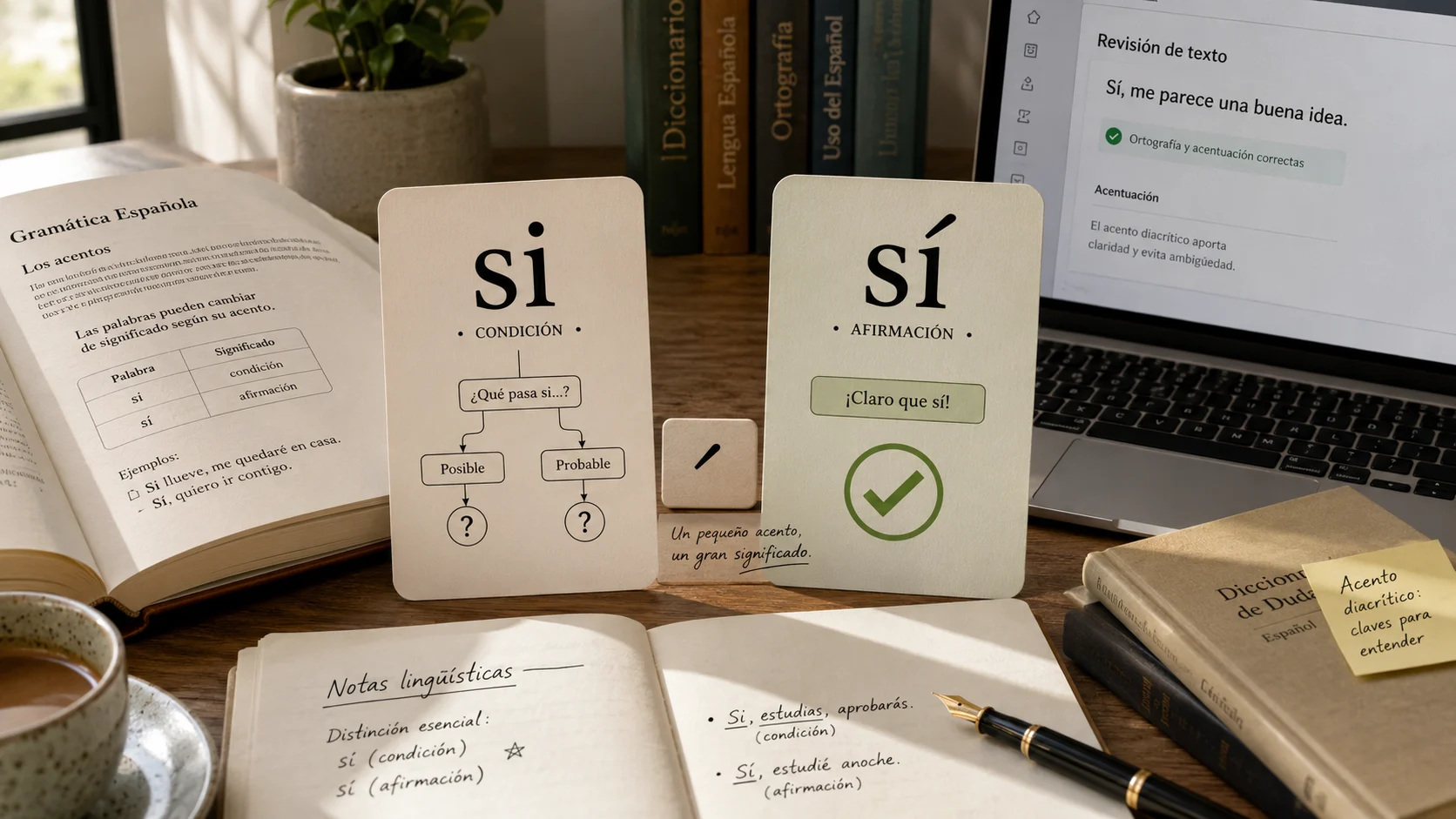
In Spanish, si and sí are different words with different meanings and grammatical roles. Si normally means “if” and introduces a condition, while sí usually means “yes” or “oneself” after certain prepositions. The accent matters because changing it can change the meaning of an entire sentence.
The difference between si and s� can be confusing, especially when unusual characters or encoding errors make a word look unfamiliar. Are these two different spellings, or is one simply a formatting mistake? Understanding the context behind these terms is essential before deciding which form belongs in your writing. A small difference in spelling or character encoding can change how a word appears, how it is searched online, and readers can understand its intended meaning.
In this guide, we’ll explore si vs. s� to clarify what these forms may represent and why they should not automatically be treated as interchangeable. You’ll learn how context, correct character encoding, and standard spelling help identify the intended term. You encountered these forms in an article, a website, or a digital document, this comparison will help you investigate the difference and avoid common writing and formatting errors.
Si or Sí | What’s the Difference?
The easiest way to remember the distinction is to connect each spelling with its most common function.
Si is normally a conjunction. It introduces a condition or possibility and is commonly translated as “if.”
For example:
Si estudias, aprobarás.
This means “If you study, you will pass.”
Here, si introduces the condition that makes the result possible. It does not mean “yes,” so no accent is used.
Sí is most commonly an affirmative adverb. It corresponds to “yes” in English.
For example:
Sí, quiero ir.
This means “Yes, I want to go.”
The accented form can also be a reflexive pronoun. In that use, it generally refers back to the subject and commonly appears after a preposition.
For example:
Ella compró el regalo para sí.
This means “She bought the gift for herself.”
The following comparison makes the distinction easier to see.
| Word | Part of speech | Main meaning | Typical use | Example |
|---|---|---|---|---|
| Si | Conjunction | If | Introduces a condition | Si vienes, hablamos. |
| Sí | Adverb | Yes | Expresses affirmation | Sí, voy contigo. |
| Sí | Reflexive pronoun | Oneself | Refers back to the subject | Lo guardó para sí. |
The key idea is that si normally introduces a condition.
Sí normally expresses agreement or affirmation.
The accented form can also refer to oneself after a preposition.
The accent is therefore meaningful and should not be treated as optional decoration.
Is Si or Sí a Grammar, Vocabulary or Usage Issue?
The distinction between si and sí is primarily a matter of spelling and grammar, although it also affects vocabulary and usage.
These words are not interchangeable. Replacing one with the other can change the grammatical structure and meaning of a sentence.
Consider:
Si quieres, podemos salir.
The meaning is “If you want, we can go out.”
Now compare:
Sí, quiero salir.
The meaning is “Yes, I want to go out.”
The first sentence contains a condition. The second contains an affirmation.
This difference matters in every register of Spanish. In casual conversation, speakers may rely heavily on context because the two forms are usually pronounced alike. In writing, however, the accent distinguishes the meanings.
In academic Spanish, the distinction is especially important because formal writing depends on grammatical precision. A missing accent can make a sentence appear careless or ambiguous.
The same applies to workplace communication. A short message such as Sí, puedo hacerlo clearly confirms something. Writing Si, puedo hacerlo introduces a spelling error because the intended meaning is “Yes.”
The distinction is also relevant to Spanish learners because English does not use an equivalent accent distinction for these two meanings. English simply uses different words, “if” and “yes.” Spanish uses visually similar forms instead.
How to Use Si Correctly
The most common use of si without an accent is to introduce a condition.
For example:
Si tienes tiempo, llámame.
“If you have time, call me.”
Si llueve, nos quedaremos en casa.
“If it rains, we will stay home.”
Si estudias más, mejorarás.
“If you study more, you will improve.”
The word si can introduce real, possible, hypothetical, or conditional situations depending on the larger verb structure.
It can appear in everyday conversation:
Si quieres café, puedo prepararlo.
It can also appear in formal writing:
Si la empresa aprueba la propuesta, el proyecto comenzará en septiembre.
Workplace example
Si termina el informe hoy, podremos enviarlo mañana.
The sentence establishes a condition. The report must be finished before the next action can happen.
Academic example
Si los resultados son consistentes, la hipótesis recibirá mayor support.
In polished Spanish, the English word should of course be replaced with apoyo:
Si los resultados son consistentes, la hipótesis recibirá mayor apoyo.
Technology example
Si introduces la contraseña correcta, el sistema permitirá el acceso.
Here, si introduces the condition required for the system to perform an action.
Usage recap for Si
Use si when the intended meaning is “if.” It commonly introduces a condition, possibility, or hypothetical situation. If you could naturally replace the word with “if” in English, the unaccented Spanish form is normally the correct choice.
How to Use Sí Correctly
Sí with an accent most commonly means “yes.”
It can be used as a direct answer:
Sí.
It can also occur within a longer statement:
Sí, estoy de acuerdo.
“Yes, I agree.”
Ella dijo que sí.
“She said yes.”
Sí quiero participar.
“Yes, I want to participate.”
The accent remains important even when sí appears inside a larger sentence.
There is another important use of sí. It can function as a reflexive pronoun after a preposition.
For example:
Lo hizo para sí.
“He did it for himself.”
Ella habló consigo misma y pensó en sí.
“She spoke to herself and thought about herself.”
This reflexive use is different from the affirmative use, but both are written with the accent.
Workplace example
Sí, puedo enviar el documento esta tarde.
Here, sí confirms the speaker’s willingness or ability to perform the task.
Academic example
El estudiante respondió que sí.
Here, sí means “yes” and functions as an affirmative response.
Technology example
Sí, deseo activar las notificaciones.
A software interface could present this sentence when asking a user to confirm an action.
Usage recap for Sí
Use sí when you mean “yes” or when the word functions as the reflexive pronoun “oneself.” The accent is required in these uses because it distinguishes sí from the conditional conjunction si.
When You Should NOT Use Si or Sí
Several common mistakes occur when writers choose the spelling based only on pronunciation.
First, do not write si when you are giving an affirmative answer. The correct form is sí.
Second, do not write sí when you are introducing a condition. The correct form is si.
Third, do not assume that the accent is unnecessary because the words sound alike. Written Spanish uses the accent to distinguish their meanings.
Fourth, do not add the accent simply because the sentence involves agreement. Check the word actually means “yes.”
Fifth, do not remove the accent from reflexive sí after a preposition when it means “oneself.”
Sixth, do not rely on automatic translation software without checking the surrounding sentence. Translation systems can sometimes select the wrong form when context is incomplete.
Seventh, do not treat si and sí as alternative spellings of the same word. They have distinct grammatical functions.
Eighth, do not assume that every Spanish accent can be ignored in informal writing. While informal digital communication often omits accents, standard written Spanish preserves them.
Common Mistakes and Decision Rules
| Correct sentence | Incorrect sentence | Explanation |
|---|---|---|
| Si vienes, te ayudaré. | Sí vienes, te ayudaré. | The sentence means “If you come,” so the conditional conjunction is required. |
| Sí, quiero ayudarte. | Si, quiero ayudarte. | The speaker is saying “Yes,” so the affirmative form needs an accent. |
| Si tienes tiempo, llámame. | Sí tienes tiempo, llámame. | A condition requires si without an accent. |
| Ella dijo que sí. | Ella dijo que si. | The phrase means that she said “yes.” |
| Lo hizo para sí. | Lo hizo para si. | The reflexive pronoun requires the accent. |
| Si estudias, aprenderás. | Sí estudias, aprenderás. | The meaning is “If you study.” |
Decision Rule Box
If you mean “if,” use si.
If you mean “yes,” use sí.
If you mean “oneself” in a reflexive construction after a preposition, use sí.
A useful test is to translate the sentence mentally. If “if” fits naturally, choose si. If “yes” fits naturally, choose sí. If the word refers back to the subject and means “oneself,” choose the accented reflexive form.
Si and Sí in Modern Technology and AI Tools
Modern technology has made this distinction both easier and more complicated.
Spanish keyboards and mobile devices generally provide automatic accent suggestions, but users can still omit accents when typing quickly. Autocorrect may sometimes identify the intended form from context, yet it should not be treated as a substitute for grammatical knowledge.
AI writing tools can also distinguish si from sí when enough context is available. For example, an AI system can recognize that Si vienes mañana contains a conditional clause, while Sí, voy mañana expresses agreement.
However, AI systems can make mistakes when sentences are short or context is incomplete. A language model may need surrounding text to determine the writer means “if,” “yes,” or “oneself.”
For professional Spanish writing, human review remains valuable. The safest approach is to understand the grammatical function first and then use technology as a verification tool.
The Etymology Behind the Distinction
The two forms have different histories and grammatical functions.
The conjunction si developed from Latin sī, which was used to introduce conditions. Spanish retained this function.
The affirmative sí has a different historical development and became the standard Spanish word for affirmation. Its written accent helps distinguish it from the conjunction.
The reflexive sí is historically related to the reflexive pronoun system and corresponds broadly to “oneself” in English.
This illustrates an important feature of Spanish orthography. Written accents sometimes distinguish words that would otherwise be identical in spelling or pronunciation. Such accents can prevent ambiguity and make grammatical relationships visible on the page.
Expert style quotation
A useful principle for Spanish learners is this: When two words sound alike but perform different grammatical jobs, let meaning determine the spelling.
That principle is particularly useful for si and sí. Pronunciation alone cannot reliably tell you which spelling is correct.
Two Practical Case Studies
Case Study One: Workplace Communication
Imagine a Spanish speaking employee replying to a manager who asks a report can be delivered today.
The intended response is:
Sí, puedo enviarlo hoy.
If the employee writes:
Si, puedo enviarlo hoy.
the reader can usually understand the intended meaning from context, but the written form is incorrect.
The practical result is straightforward. Adding the accent turns an informal looking spelling mistake into standard written Spanish.
The lesson is especially important for emails, reports, customer communication, and professional documents where small orthographic errors can affect perceived attention to detail.
Case Study Two: Conditional Instructions
Consider a technology support guide:
Si introduces el código correcto, recibirás acceso.
The sentence means:
“If you enter the correct code, you will receive access.”
Changing the first word to sí would make the sentence grammatically incorrect because the writer is not saying “yes.” The writer is establishing a condition.
The concrete result is a change in meaning and grammatical function. The unaccented form creates the intended conditional instruction, while the accented form breaks the sentence structure.
These examples show why the distinction matters beyond language exercises. It directly affects workplace communication, instructional writing, software messages, educational material, and everyday correspondence.
Error Prevention Checklist
Always use Si when
- The word means “if.”
- It introduces a condition.
- It introduces a possibility.
- It begins a conditional statement.
- It connects a condition with a possible result.
Never use Sí when
- You mean “if.”
- You are introducing a condition.
- You are describing a hypothetical situation with a conditional clause.
Always use Sí when
- You mean “yes.”
- You are affirming something.
- You are reporting an affirmative response.
- The word means “oneself” in a reflexive construction after a preposition.
Related Grammar Confusions You Should Master
Spanish learners who understand si and sí should also study other commonly confused forms.
- tu and tú
- el and él
- mi and mí
- de and dé
- se and sé
- te and té
- mas and más
- aun and aún
- solo and sólo in historical and modern usage
- porque, por qué, porqué, and por que
These pairs demonstrate a broader lesson. Spanish accents can communicate grammatical information and distinguish words with different functions.
FAQs
What is the difference between si and sí in Spanish?
Si normally means “if,” while sí normally means “yes” or “oneself” in a reflexive construction.
When should I use si without an accent?
Use si without an accent when it introduces a condition, possibility, or hypothetical situation.
When should I write sí with an accent?
Write sí with an accent when you mean “yes” or when it functions as the reflexive pronoun meaning “oneself.”
Does si mean yes in Spanish?
No, standard Spanish uses sí with an accent to mean “yes,” while si without an accent generally means “if.”
Why does sí need an accent?
The accent distinguishes affirmative or reflexive sí from the conjunction si, which introduces conditions.
Are si and sí pronounced differently?
They are generally pronounced alike, which is one reason the written accent is important for distinguishing their meanings.
Is si or sí more common in Spanish?
Both are common, but their frequency depends on context because they perform different grammatical functions.
Can I omit the accent on sí when texting?
Informal digital writing sometimes omits accents, but standard Spanish writing should retain the accent.
Does AI understand the difference between si and sí?
Modern AI language tools often distinguish them through context, but human proofreading is still advisable for important Spanish writing.
Conclusion
The difference between si and sí is small in appearance but significant in meaning. Si without an accent generally means “if” and introduces a condition. Sí with an accent generally means “yes,” and it can also function as a reflexive pronoun meaning “oneself.”
The best way to avoid confusion is to identify the grammatical function before choosing the spelling. If the sentence expresses a condition, use si. If it expresses affirmation or refers reflexively to oneself, use sí.
Once this simple distinction becomes automatic, one of the most common Spanish spelling and grammar confusions becomes much easier to handle in everyday, academic, professional, and digital writing.
Discover More Related Articles:
- Fiancee or Fiance | Which Spelling Is Correct & When to Use Each In 2026
- Hinge or Bumble | Which Dating App Is Better for Finding a Relationship In 2026
- Weather or Seaside | Meaning & Usage Explained for English Learners In 2026